
Why is generational renewal in livestock farming vital to the nation's future?
Generational renewal in figures
43%
of farms in rural municipalities
Located in towns with fewer than 5,000 inhabitants.
45%
of processing plants in rural areas
Processing based in small municipalities.
42%
of direct jobs held by women
In farms and processing plants of the pork sector.
10
goals of the European Rural Pact
The framework INTERPORC aligns its work with.
CONCEPT AND IMPORTANCE
Generational renewal is not merely an internal workforce requirement for the countryside; it is a guarantee of socio-economic survival and food security for society as a whole. Ensuring new generations take over on farms and in local processing industries is the only viable path to safeguarding national food sovereignty and keeping fresh, local produce supply for our cities..
INTERPORC actively aligns with the 10 strategic goals of the European Commission's European Rural Pact. We are committed to turning rural areas into more prosperous, connected, resilient, and vibrant communities, attracting young talent by offering modern economic prospects based on digitalisation, smart farming technologies, and environmental sustainability.
YOUNG AND FEMALE TALENT
Empowering young talent and women
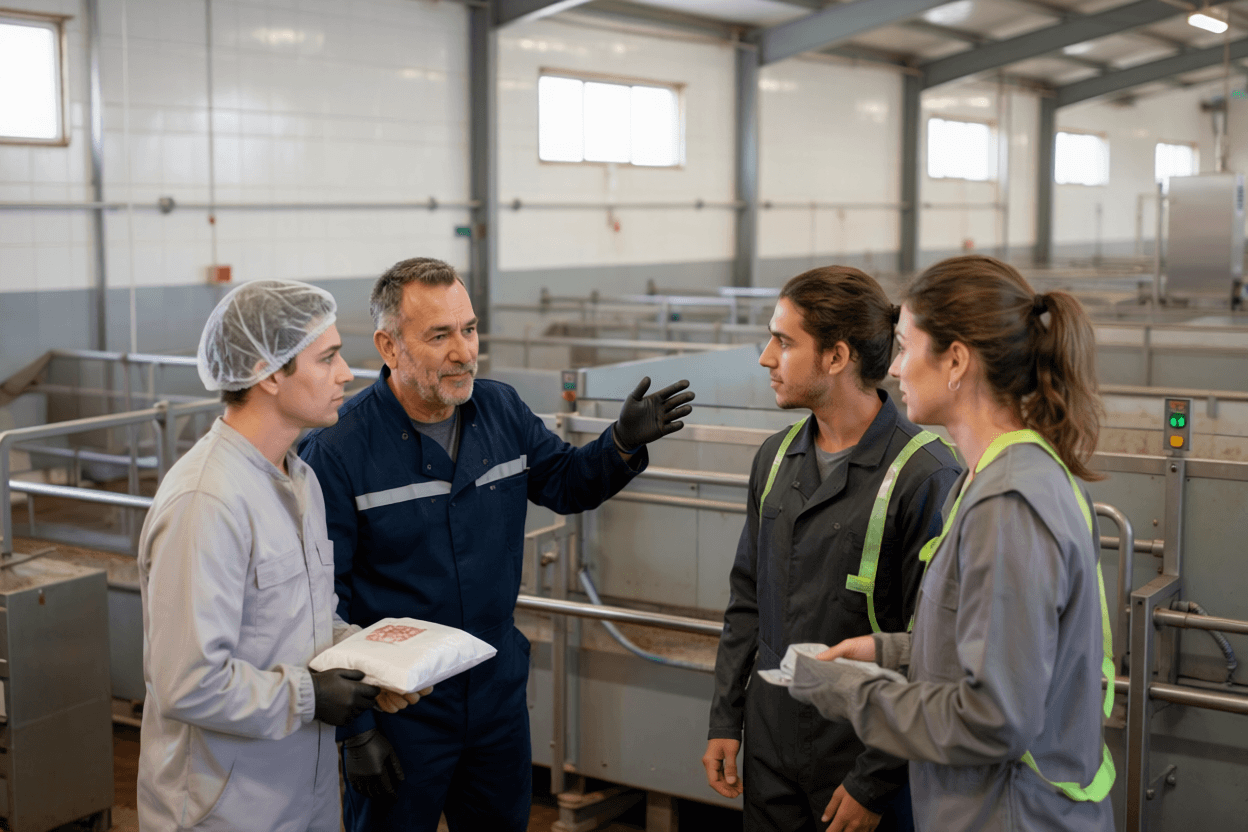
The modernization of the pork sector has redefined the traditional image of rural activities. Today, a farm or processing plant incorporates automated controls, data analytics, biosecurity protocols, , energy efficiency systems, environmental management, and specialized technical teams.
Activity and talent development
Digitalisation in Rural Areas
Technology enhances process control, animal health, resource efficiency, and decision-making. This opens doors to young professionals trained in veterinary science, engineering, IT, management, sustainability, and data analysis.
Population Retention and Stable Female Employment
The sector maintains a strong footprint in small towns: 43% of farms and 45% of processing facilities are based in villages with under 5,000 residents, with women occupying 42% of direct roles across farms and industries.
A Multi-Disciplinary Value Chain
White pork sector requires far more than farmers alone. It relies on veterinarians, engineers, technicians, logistics operators, processing plant staff, food safety specialists, butchers, quality managers, communication experts, researchers, and international trade experts.
JOIN THE SECTOR
The future of rural areas is also written in the countryside
Discover the professions, training and opportunities in the white pork sector.